The Ion Question: A Smarter NZ Guide to Negative Ion Air Purifiers
The Ion Question: A Smarter NZ Guide to Negative Ion Air Purifiers
Quick answer: A negative ion air purifier releases electrically charged ions that attach to particles in the air. The best option in NZ is not chosen by ion output alone. We recommend looking at filtration, airflow, ozone safety, room size, maintenance, and how you will actually use it at home, at work, or on the move.
Negative ion air purifiers are popular because the idea sounds simple: release ions, charge airborne particles, and help remove them from the air. In real homes, the smarter question is not whether ions sound impressive. It is whether the whole system can support cleaner indoor air while staying practical for your space.
For NZ homes, we see two common use cases. If you want a room-focused unit, start with the air purifier collection and compare airflow, filters, and maintenance. If you want a home air purification system with ion technology, TherapyAir Ion is the product to review. If you want a personal portable option, MyIon is the better place to start.
What is a negative ion air purifier?
A negative ion air purifier is an air cleaning device that produces negatively charged ions. These ions can attach to airborne particles, giving them an electrical charge. Depending on the design, charged particles may be collected inside the device, join together and fall out of the air, or attach to nearby surfaces.
That is why we prefer to talk about the complete purifier, not just the ion generator. A device with strong filtration, considered airflow, sensible placement, and clear maintenance is more useful than a device that only talks about ion output. Ion technology can be one part of an indoor air plan, but it should not replace ventilation, source control, or proper filter care.
How negative ion air purifiers work
Most negative ion air purifiers use an electrical process to create charged ions. These ions move into the air or through the air path inside the unit. Once particles are charged, they are easier to influence through electrostatic attraction.
The basic process
First, the device draws in air or releases ions into the surrounding area. Second, particles such as dust, smoke residue, pollen, or fine matter can become charged. Third, the device relies on filtration, collection plates, surface settling, or a combination of methods to reduce airborne particles.
Why airflow still matters
Airflow is what gets room air to the cleaning technology. A unit with good filtration but weak airflow may clean too slowly for the room. A high ion claim without clear airflow or filtration details can also be hard to compare. When comparing negative ion air purifiers, we recommend checking the intended room size, fan settings, filter type, and replacement schedule.
Negative ions, HEPA filtration, and ozone: What to know
The biggest buying mistake is treating all ion air purifiers as the same. They are not. Some devices use ionisation as an added feature beside filters. Some rely heavily on ions. Some electronic air cleaners can produce ozone, which is why safety information matters.
For everyday NZ households, we recommend prioritising a purifier that combines particle capture with a responsible ion design. HEPA-style filtration is widely used for dust, pollen, mould particles, bacteria, and aerosols, while carbon filtration can help with some odours and gases. Ion technology should be assessed as a support feature, not as a magic shortcut.
If filters are part of your decision, our HEPA filter NZ guide is a helpful next read. For TherapyAir owners, replacement filters such as the HEPA filter for TherapyAir Ion are important because a purifier can only perform well when its filters are looked after.
TherapyAir Ion and MyIon: Which product fits which situation?
TherapyAir Ion and MyIon should not be compared as if they do exactly the same job. They solve different practical problems.
TherapyAir Ion for room-focused purification
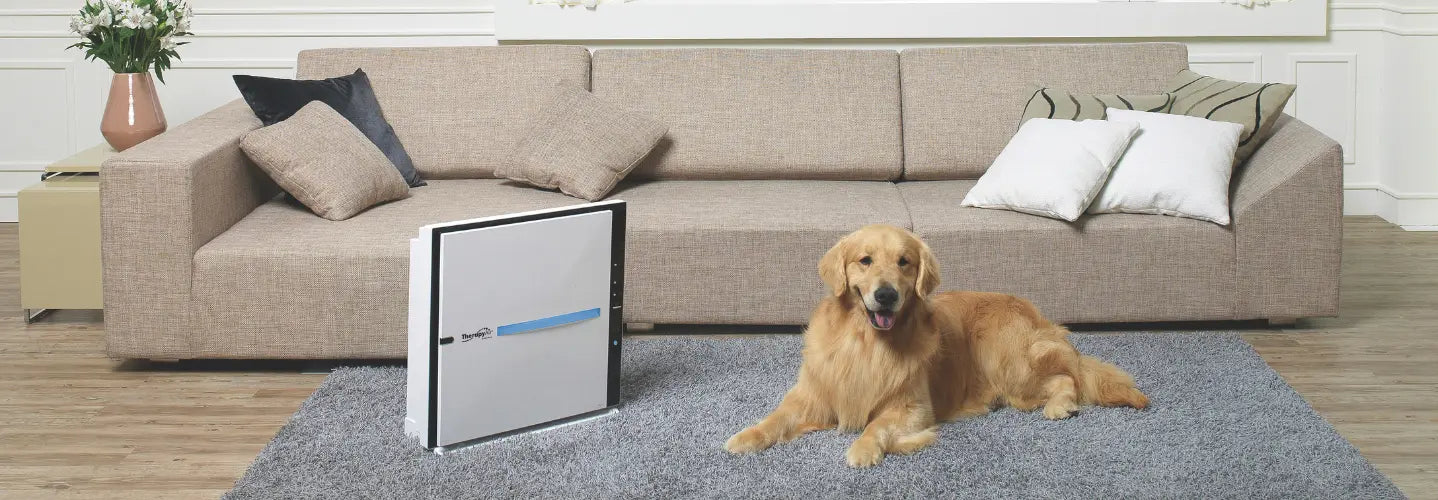
TherapyAir Ion is the stronger fit when you are thinking about a room, bedroom, living space, office, or shared indoor area. This is where a purifier needs a proper air pathway, filter care, and consistent operation. We recommend it for shoppers who want a more complete indoor air appliance and are comparing negative ion air purifier NZ options for a fixed space.
MyIon for personal, portable use
MyIon is better suited to people who want a wearable or portable ion option. It is not a substitute for cleaning a whole room. Think of it as a personal air support product for moments when portability matters more than room coverage.
Using both without overcomplicating your setup
Some customers may use TherapyAir Ion at home and MyIon when moving between environments. The key is to be clear about expectations. TherapyAir Ion is the home or room purifier path. MyIon is the personal portable path. Neither removes the need to reduce indoor pollution sources, open windows when suitable, and maintain filters.
How to choose the best negative ion air purifier in NZ
The best negative ion air purifier NZ shoppers can choose is the one that fits the room, the pollutant concern, and the maintenance routine. Use this checklist before buying.
1. Start with the room and the reason
Are you trying to improve a bedroom, a lounge, a home office, or a personal commute? A room purifier needs enough airflow for the space. A wearable product is about portability. This is the point where TherapyAir Ion and MyIon become easier to separate.
2. Look for filtration, not just ion claims
We recommend choosing a product that explains its filter path and replacement needs. Ionisation can be useful, but filters are what many buyers understand, maintain, and verify. Check whether the product uses particle filtration, carbon filtration, or other filter layers.
3. Check ozone information
Do not buy a purifier only because it promises a fresh smell. Fresh-smelling air is not proof that air is cleaner. Ozone is a gas that can irritate the lungs, and some electronic air cleaning technologies may produce it. Look for clear safety information and avoid ozone generators sold as air cleaners for occupied spaces.
4. Plan the running costs
Filter replacement is not a flaw. It is part of how many air purifiers keep working. Before buying, check what filters are required, how often they should be replaced, and whether replacements are easy to order. Our air purifier filter guide explains the maintenance side in more detail.
5. Match the product to real life
The best purifier is the one you will use correctly. For a bedroom, noise and night operation matter. For a living area, coverage and filter life matter. For travel or personal use, size and portability matter. That is why we position TherapyAir Ion and MyIon for different uses rather than forcing one product to answer every question.
Common mistakes to avoid
Buying only on ion output
High ion numbers can sound impressive, but they do not tell the full story. Ask how particles are captured or removed, what room size the device suits, and how maintenance works.
Ignoring ventilation
An air purifier can clean air that passes through it, but it does not supply fresh outdoor air. In NZ homes, ventilation is still important, especially when rooms are closed, damp, crowded, or affected by cooking, heating, or indoor pollutants.
Expecting medical outcomes
We do not recommend buying a negative ion air purifier as a treatment for a health condition. It can be part of a cleaner indoor air routine, but it should not replace medical advice, prescribed treatment, or professional support for dampness, mould, smoke, or building issues.
FAQs
Do negative ion air purifiers work?
Negative ion air purifiers can help reduce some airborne particles by charging them so they are easier to collect or settle out of the air. Results depend on the device design, airflow, filtration, room size, placement, and maintenance.
Are negative ions safe to breathe?
Negative ions themselves are not the only safety question. The bigger issue is whether the device produces ozone or other byproducts. We recommend choosing products with clear safety information and avoiding ozone generators for occupied rooms.
Is negative ion technology legit?
Negative ion technology is a real air cleaning method, but it is often overmarketed. We recommend treating it as one feature within a purifier, not as a guaranteed solution for every indoor air concern.
What are common mistakes when buying a negative ion air purifier in NZ?
Common mistakes include buying on ion output alone, ignoring room size, forgetting filter replacement, confusing a portable ion product with a whole-room purifier, and overlooking ozone safety information.
What should I look for in a negative ion air purifier in NZ?
Look for a clear use case, suitable room coverage, responsible ion technology, strong filtration, replacement filter availability, sensible noise levels, and easy maintenance. For room use, TherapyAir Ion is the product to compare. For personal portability, review MyIon.
How do I compare negative ion air purifier options in NZ?
Compare the intended use first, then compare filtration, airflow, ozone information, running costs, filter replacement, and product size. Do not compare a room purifier and a wearable purifier as if they are the same type of product.
What maintenance is required for a negative ion air purifier?
Maintenance may include replacing filters, cleaning the outer vents, checking the air path, and following the product manual. If the unit uses collection plates or specialist parts, clean or replace them only as directed.
Is TherapyAir or MyIon better for my situation?
Choose TherapyAir Ion when you want room-focused air purification at home or work. Choose MyIon when portability is the priority. Some customers may use both, with TherapyAir Ion for indoor spaces and MyIon for personal movement between environments.
Next steps
- Shop the air purifier collection
- Review TherapyAir Ion
- Review MyIon
- Compare the best air purifier NZ options
- Learn how to choose an air purifier in NZ
- Read the TherapyAir Ion innovation guide
- Read the MyIon wearable ionic air purifier guide
References
- Health New Zealand: Ventilation
- Ministry of Health NZ: Clearing the Air
- US EPA: Guide to Air Cleaners in the Home
- US EPA: Ionizers and ozone-generating air cleaners
- California Air Resources Board: Certified air cleaning devices
- PubMed: Indoor negative air ions, particulate matter, and cardiorespiratory effects