Air Purifier for Cooking Smells NZ: What Helps When Kitchen Odours Spread Through the House
Air Purifier for Cooking Smells NZ: What Helps When Kitchen Odours Spread Through the House
Dinner is done, the plates are stacked, and you have moved into the lounge. But the fish, frying oil, onion, garlic or curry seems to have come with you. In an open-plan home, cooking air can move well beyond the cooktop before you have even sat down.
If you are looking for an air purifier for cooking smells NZ homes can use in an open-plan space, the practical answer is yes: a suitable room purifier with an activated-carbon stage can help reduce some lingering cooking odours in the air passing through the unit. But it works best after your rangehood, extractor fan or suitable ventilation has already captured or diluted as much cooking pollution as possible at the source. For what escapes into the room, you can browse our air purifier collection and look for filtration designed for both particles and odours.
Why dinner follows you out of the kitchen
Cooking does not stay neatly above the pan. Heat carries air upward, people move through the room, doors open, fans run, and an open-plan kitchen gives that air an easy route into the dining area and lounge.
That is why a meal can smell perfectly normal while you are cooking, then feel much stronger later when you sit on the sofa. The smell is no longer just at the cooktop. Some of the material released during cooking has mixed into the wider room air, while some has begun settling onto nearby surfaces and fabrics.
Strong meals make this especially noticeable. Frying, searing fish, browning onions, garlic-heavy dishes and curries can all leave a clear scent behind. In a compact open-plan home, there may be very little distance between the pan and the place where everyone relaxes after dinner.
Catch as much as you can before it joins the room
The first job is still source extraction. If you have a rangehood that vents outside, use it while cooking. An extractor fan and sensible ventilation can also help remove or dilute cooking air before it spreads through the rest of the house.
This matters because an air purifier is not a substitute for catching steam, grease and cooking fumes close to where they are produced. The less that escapes the kitchen zone, the less work there is for the rest of the room to do afterwards.
In practical terms, think of the handoff this way: extraction deals with as much as possible at the cooktop, then room filtration helps with airborne material that has already moved into the open-plan living space.
What is left once the smell has escaped
Cooking air is a mix, not one single thing. Depending on what and how you cook, it can contain fine airborne particles, odour-bearing gases, moisture and tiny droplets. Some of that stays airborne for a time. Some settles onto benches, cabinetry, curtains, cushions and other surfaces.
That is why one appliance cannot solve every part of a stubborn kitchen smell. A purifier only works on air that reaches the machine. It cannot wipe grease from a splashback, wash a tea towel, clean a rangehood filter or remove a smell that has soaked into a fabric chair.
So if yesterday's dinner is still obvious, it is worth thinking about both the air and the room itself. Filtration can help with what remains airborne, while normal cleaning and ventilation still matter for what has settled.
Where an air purifier starts earning its place
Once cooking air has escaped the immediate kitchen area, a room purifier becomes much more relevant. This is the part many open-plan households are really trying to solve: the rangehood did its job over the cooktop, but the dining and lounge area still smells like dinner an hour later.
A purifier can keep drawing room air through its filters and reducing material that reaches the unit. For cooking odours, we look for a system that does more than particle filtration alone. A HEPA stage is useful for airborne particles, while an activated-carbon stage gives the purifier a separate way to deal with some odour-bearing gases passing through it.
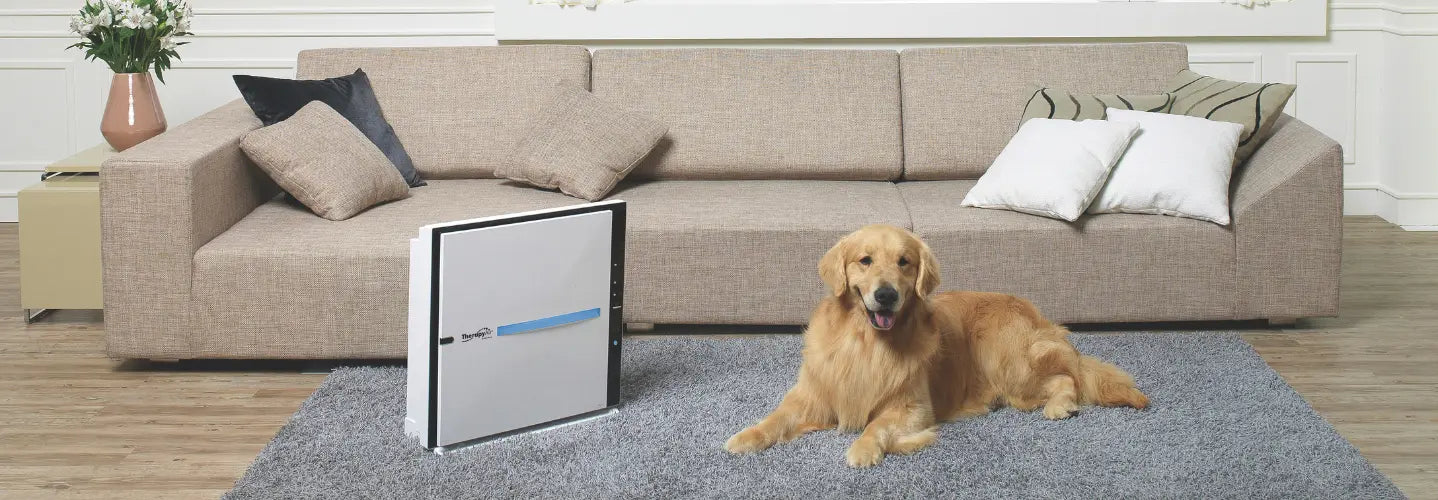
That is one reason we often point customers to Therapy Air Ion when cooking smells are part of the problem. It combines room-air filtration with a dedicated activated-carbon stage rather than expecting one filter to do every job.
Placement matters too. In an open-plan kitchen and lounge, the purifier needs access to the air you actually want to filter. A unit hidden behind the sofa or pushed into a closed corner cannot move room air through its filters as freely.
When dinner lingers: why Therapy Air has a separate carbon stage
Odour filtration is a different job from particle filtration, and that is why we value a dedicated activated-carbon stage when cooking smells are one of your main concerns.
Therapy Air Ion uses five filtration stages: antistatic, antibacterial, HEPA, anti-allergenic and activated carbon. Its activated-carbon filter is specifically intended for unpleasant food smells and other odours. That means the system has a stage aimed at odour-bearing material in the air, alongside separate filtration stages for airborne particles.
For an open-plan household dealing with recurring cooking odours, we believe Therapy Air is well worth considering. It gives you dedicated odour filtration and room-air filtration in one system, with a maximum purification capacity of 328 m3/h and maximum airflow of 5.8 m3/min. Its listed noise range is 21 to 46 dB and power is 47 W, so there is useful airflow available without turning the purifier into an oversized kitchen appliance.
We would not promise that any purifier will make every cooking smell disappear completely. Odour strength, room size, extraction, where the smell has settled and the condition of the carbon filter all affect the result. But when the problem is cooking air that has moved into the lounge, having a separate carbon stage is a much better fit than relying on particle filtration alone.
For maintenance, the Therapy Air Ion Filter Set contains two antibacterial filters, one HEPA filter, one anti-allergenic filter and one activated-carbon filter. The current guidance for the special filter set is about once per year, with the actual replacement frequency depending on pollution conditions.
Give the purifier clean air access, not a blast of steam
Near the kitchen can be useful. Right beside the pan is not.
Give the purifier a clear route to the open-plan room air, but keep it away from direct grease splatter, heavy steam and the hottest part of the cooking zone. You want the machine filtering the air that has moved into the room, not sitting in the path of wet steam or oily droplets straight off the cooktop.
If you are working out the best spot beside a dining or lounge area, our air purifier placement guide for NZ homes explains the wider placement basics without turning your kitchen into a game of furniture Tetris.
When yesterday's smell starts coming back
If the same cooking smell keeps returning, it does not automatically mean the purifier is failing. Sometimes the original source still needs attention. A greasy rangehood filter, used pan, oven tray, rubbish bin or cooking splash can keep releasing odour after the meal is over.
Soft furnishings can hold onto smells too. Curtains, cushions, throws and fabric dining chairs may pick up odour, especially when strong cooking air regularly travels through the same open-plan space.
And then there is the carbon filter itself. Activated carbon has a limited working capacity. If odour control is clearly dropping, it may be time to check the filter condition and the guidance for your unit. Our air purifier filter replacement guide covers the signs to watch, while the Therapy Air Ion activated-carbon filter is available separately when you need the matching replacement.
If you want a refresher on what each filter type is meant to do, see our air purifier filter guide.
Common questions
Do air purifiers remove cooking smells?
A suitable air purifier can help reduce some lingering cooking smells, especially if it has an activated-carbon stage for odour-bearing gases. It will not capture every smell in every room, and it works best after source extraction and ventilation have already dealt with as much cooking pollution as possible.
Does a HEPA filter remove cooking odours?
HEPA filtration is mainly for airborne particles. Cooking odours also involve gases, which are a different filtration job. If smells are a priority, we prefer a purifier that combines particle filtration with activated carbon rather than relying on HEPA alone.
Why does activated carbon matter for kitchen smells?
Activated carbon is used to adsorb some gases and odour-bearing compounds from air passing through the filter. That is why a dedicated carbon stage is useful when fish, frying, onion, garlic, curry or other strong cooking smells tend to linger after the meal.
Can an air purifier replace a rangehood?
No. Use a rangehood, extractor fan or suitable ventilation to capture or remove as much cooking pollution as possible at the source. A room purifier is better used for airborne material that escapes into the dining or living space.
Where should an air purifier go in an open-plan kitchen and lounge?
Place it where it can draw in the open-plan room air with clear space around its intake and outlet. Keep it close enough to the living zone to filter the air you care about, but away from direct grease splatter, heavy steam and intense heat from the cooktop.
Should I run an air purifier while cooking or after cooking?
You can run it while cooking if it is safely positioned away from direct steam, grease and heat, with your rangehood or extractor doing the source-control job. Keeping it running afterwards can also help as escaped cooking air continues moving through the open-plan room.
Why does the cooking smell come back even when the purifier is running?
The source may still need cleaning, extraction may not have caught enough at the cooktop, soft furnishings may have absorbed the smell, or the carbon filter may be losing odour-control capacity. A purifier can only work on air that passes through it, so settled odours still need normal cleaning.
What should I do if cooking smoke rather than smell is the main problem?
Smoke adds a bigger particle problem, so source control and suitable particle filtration become especially important. Read our air purifier for smoke NZ guide for the fuller explanation.
Next steps
For cooking smells in an open-plan NZ home, the best setup is a practical combination. Capture as much cooking pollution as you can at the source with a rangehood, extractor or suitable ventilation. Then use room filtration for what escapes into the dining and lounge area.
If lingering food odours are a regular problem, look for a purifier with a genuine activated-carbon stage as well as particle filtration, enough airflow for the space and replacement filters you can keep on hand. That is exactly why Therapy Air Ion is one of the options we are happy to recommend for this job.