VOCs in the Home: Can an Air Purifier Remove Them?
VOCs in the Home: Can an Air Purifier Remove Them?
We often hear this after a freshly painted bedroom or a new sofa arrives: can air purifiers remove VOCs, and will they take away that chemical smell? It's a sensible question, especially when you want a newly furnished space to feel comfortable.
Some air purifiers can help reduce certain volatile organic compounds (VOCs) if they include activated carbon or another filter made for gases. HEPA alone collects particles, not VOC gases. Results depend on the compound, carbon capacity, airflow and the room. Reducing the source and bringing in outdoor air still matter.
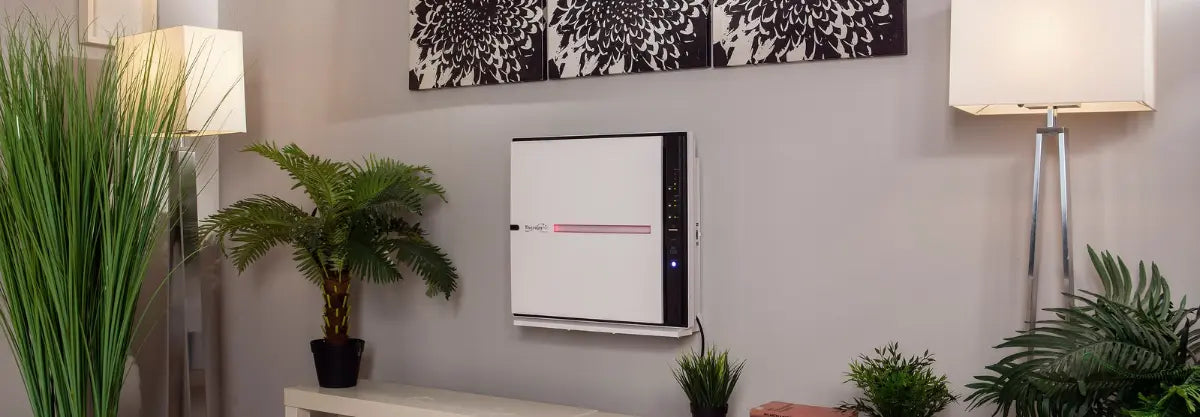
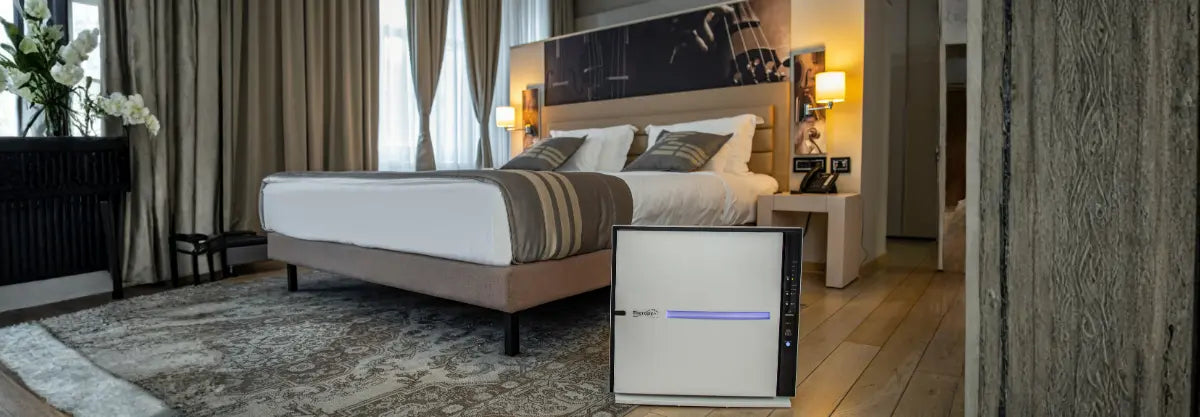
If you're looking for an air purifier for VOCs in NZ, start with the gas filter rather than the particle rating. Our range of air purifiers includes Therapy Air Ion, a room unit with a dedicated activated-carbon stage alongside particle filters. Here's where that can help and what no purifier can promise.
Why the smell of a new room can linger
VOCs are chemicals released into room air as gases. Unlike dust, they're invisible, and different products release different mixtures.
Paint, sealants and adhesives can emit compounds during application and drying. Furniture made with MDF, some flooring and interior finishes can continue giving off small amounts after installation. Cleaning sprays and solvent-based products more often release vapours while they're being used, although stored containers can also contribute if not sealed properly.
A spray used once may be easy to change. A new cabinet may release compounds for longer. A purifier can help filter room air, but it can't stop the cabinet itself from emitting gases.
Does a stronger smell mean more VOCs?
Smell may prompt you to open a window, but it isn't a reliable VOC meter. Some chemicals are noticeable in tiny amounts; others have little odour. A strong new-furniture smell doesn't automatically mean danger, and a room that no longer smells of paint isn't proof that every gas has gone.
Notice what changed, whether the odour returns after ventilation and whether something is still releasing vapours. Inexpensive monitors that show TVOC (total VOC) can sometimes help you spot a rise or fall, but they don't identify all individual compounds or certify a room as safe.
Good filtration may make a room more pleasant. Just don't use smell or a single TVOC number as your only guide.
What happens when VOCs reach an air purifier?
As air passes through a purifier, a HEPA filter traps dust and fine particles. VOC gas molecules can pass through a HEPA-only filter. Our HEPA filter guide explains more about particle capture.
Activated carbon has a large internal surface where some gas molecules can stick. This is adsorption: gases cling to carbon rather than being caught like dust in a mesh. That makes a carbon stage useful for some household chemical odours.
Not all VOCs cling equally well. Performance depends on the compound, the type and amount of carbon, how long air contacts it, how quickly air flows through, and whether the filter is already loaded. Formaldehyde, which can be released by some pressed-wood products, is a gas that ordinary activated carbon may not capture well. Some situations need a specialised sorbent or better source control.
That doesn't reduce the value of activated carbon. It explains why it's sensible to choose a gas-filtering stage and keep it in good condition, rather than expect every odour and gas to respond the same way.
Why not every VOC removal claim tells the whole story
A purifier can have impressive particle numbers without having the same result for VOCs. A HEPA efficiency figure describes particle capture. Dust or smoke clean air delivery rate (CADR) describes how quickly a unit removes test particles from room air. Neither number tells you a percentage of gaseous VOC removal.
That's why we look for the gas-filtering stage and any gas-specific test information when considering chemical smells. Consumer NZ's 2026 air-purifier testing checks VOC removal separately, using acetone, rather than treating dust and smoke results as a substitute. Even an acetone result doesn't establish equal performance for every VOC. For Therapy Air Ion, we use its published room and airflow figures to discuss fit, not to promise a particular VOC-removal percentage.
Therapy Air Ion: room filtration with a carbon stage you can replace
Our Therapy Air Ion brings together five filtration stages: antistatic, antibacterial, HEPA, anti-allergenic and activated carbon. The first four support particle filtration in different ways, from larger dust to finer airborne material. For chemical smells, the important extra is the dedicated activated-carbon stage.
We like having particle and odour filtration together, without expecting HEPA to capture gases. The carbon cartridge is separate, and we stock replacements to keep that stage working over time.
For room fit, Therapy Air Ion (PWC-570) has a listed maximum purification capacity of 328 m³/h and recommended coverage up to 26 m² at five air changes per hour. It also offers a remote control and Bedtime Mode, with a listed noise range of 21 to 46 dB. Those specifications help you plan where to use it; they aren't a guarantee of how much of any particular VOC it will remove.
We believe it's a worthwhile option when you want practical, ongoing room filtration with a maintainable carbon stage, especially after you've dealt with the obvious source of a smell.
If the chemical smell keeps coming back
If a smell returns after you shut the windows, check what's still releasing vapours. Flooring, cabinetry, stored solvents or a new coating may emit for longer than a day. A purifier doesn't stop the source.
Where possible, choose lower-emission products, keep lids tightly closed, remove leftover chemicals from living spaces and follow ventilation instructions on paints, coatings and adhesives. Use suitable outdoor-air ventilation when conditions allow. For heavy solvent work or intensive painting, follow the product's protective instructions; a portable purifier isn't a substitute for those controls.
Carbon also has finite capacity. Once it's loaded, odour filtering may become less effective. We offer a replacement activated-carbon filter for Therapy Air Ion and a complete replacement filter set. We recommend changing the relevant special filters around once a year, adjusted for pollution conditions and manufacturer guidance. If a smell stays strong or seems unusual, investigate the source rather than simply running the purifier harder.
When an air purifier is worth adding to your home
Once you've reduced obvious VOC sources and arranged appropriate ventilation, an air purifier can add filtration for a bedroom, lounge or home office. We'd favour a full-size room model with activated carbon over a HEPA-only purifier or wearable ioniser.
That's where Therapy Air Ion makes sense to explore. Its carbon stage provides a way to adsorb selected gaseous pollutants, while the other filters help with airborne particles. Replacement cartridges make ownership more straightforward, and the room specifications help you match it to your space. If your room is unusually large or the concern involves a particular chemical, we'd rather help you check suitability than guess.
Common questions about VOCs and air purifiers
Can an air purifier remove VOCs from indoor air?
Yes, some air purifiers can help reduce certain VOCs when they use activated carbon or another filter designed for gases. Results vary with the chemical, filter material, airflow, room size and how much capacity the filter has left. Ventilation and dealing with the emitting product remain important parts of reducing VOCs indoors.
Does a HEPA filter remove VOCs?
No. HEPA filters are made to capture airborne particles such as dust, pollen and fine smoke particles, not individual gas molecules. VOCs need a suitable gas-removal stage, commonly activated carbon. A purifier that combines HEPA with activated carbon can address both types of airborne pollutant, though gas removal still varies by compound.
Can an air purifier help with new paint or furniture smells?
An air purifier with a suitable activated-carbon stage may help reduce some of the gases behind paint or new-furniture odours. Open windows or use appropriate ventilation as directed by the product maker, and allow materials to finish releasing vapours. Filtration can support these steps, but it cannot stop emissions from the paint or furniture itself.
Can activated carbon remove formaldehyde?
Ordinary activated carbon is not equally effective for every VOC, and formaldehyde can be particularly difficult for it to capture. Some filters use specialised materials designed for this gas. If formaldehyde is your main concern, focus on reducing the emitting source, ventilation and evidence specific to formaldehyde, rather than a general carbon-filter claim.
How do I know when an activated-carbon filter needs replacing?
Activated carbon has limited capacity, so it gradually becomes less effective as it collects gases. Follow the purifier's replacement guidance and consider your household conditions. Reduced odour control can be a practical clue, but a lack of smell does not prove a filter is still removing every VOC. For Therapy Air Ion, we supply replacement carbon cartridges.
Which air purifier should I consider for VOCs in a New Zealand home?
Look for a room purifier with a dedicated activated-carbon or other suitable gas-filtering stage, clear room-size information and replacement filters you can obtain. Our Therapy Air Ion is worth considering because it combines particle filtration with a replaceable carbon cartridge. We can help you check the room fit and your particular concern before buying.
A practical next step for cleaner air at home
An activated-carbon stage is a useful addition when certain chemical odours and airborne gases are on your mind, especially alongside good particle filtration. Therapy Air Ion combines both with replaceable filters.
If you want to talk through a room size, recent renovation or specific chemical concern, contact our team. We're happy to help you find a sensible fit. Otherwise, take a look at our room purifiers and see which option suits your home.
References
- NZ Building Performance: Managing pollution and unhealthy air
- Consumer NZ: How we test air purifiers
- US EPA: Volatile organic compounds and indoor air quality
- US EPA: Guide to air cleaners in the home
- US EPA: Low-cost air pollution monitors and indoor air quality
- US EPA: Residential air cleaners, technical summary