Where to Put an Air Purifier in Your NZ Home: Bedroom, Lounge and Office Setup Guide
Where to Put an Air Purifier in Your NZ Home: Bedroom, Lounge and Office Setup Guide
The air purifier is unboxed, plugged in and ready. Now comes the real setup question: does it belong beside the bed, in the hallway, near a window, behind the couch or beside the desk?
Put your air purifier in the room you want to clean most, give it clear airflow around the intake and outlet, then run it consistently. Most portable air purifiers work room by room, so placement matters. The best air purifier placement is not the prettiest empty corner. It is the spot where the unit can pull room air in, filter it, and send cleaner air back into the space you are actually using.
For most NZ homes, that means choosing the bedroom overnight, the lounge in the evening or the home office during work hours. Once that room is set up well, you can move the unit only when your routine changes. For product options, start with the air purifier collection.
The simple rule: clean one room properly first
If you are wondering where should I put air purifier equipment in a normal house, begin with one room. A portable air purifier is designed to reduce airborne particles in the area it is used in. It is not a whole-home ventilation system and it cannot reliably clean every bedroom, hallway and living space from one distant position.
Choose the room by time spent and purpose:
- Bedroom: best if you want cleaner air around your sleeping routine.
- Lounge: best if this is where the family gathers, pets rest or evening doors are opened often.
- Home office: best if you spend long work hours in one smaller space.
Size also matters. A purifier works best when its airflow and filter capacity suit the room volume. For more on sizing and filtration, see the Air Purifier NZ guide.
Best place for an air purifier in the bedroom
An air purifier bedroom NZ setup should prioritise steady overnight airflow without a direct draft on your face. Place the unit near the sleeping area, but not so close that it blows straight at your pillow. A bedside-adjacent position, a clear wall space or a stable floor position beside the room path usually works better than hiding it in a corner.
Bedroom placement map
- Good: beside a clear wall, near the bed zone, with space around the front and sides.
- Use caution: directly beside your head, especially on a high fan speed.
- Avoid: behind curtains, under a bedside table, hard against a wall or trapped behind a laundry basket.
At night, close the bedroom door most of the way if you are cleaning that room first. This helps the purifier recirculate the same room air rather than trying to pull in air from the hallway. Use bedtime, sleep or quiet mode if available, and increase the fan speed earlier in the evening if the room has been closed up all day.
Best place for an air purifier in the lounge
The best air purifier lounge setup is close to the main sitting zone, not tucked into the least visible corner. In a lounge, the purifier needs to work around furniture, curtains, entertainment units, sliding doors and open-plan spaces.
Place it where air can move freely between the unit and the part of the room people use most. If your couch faces a television, a side-wall position near the seating area is usually more practical than a position behind the couch or inside an entertainment cabinet.
Open-plan lounge limits
Open-plan living changes the job. A lounge connected to a dining area, kitchen and hallway is a much larger air volume than a closed lounge. One air purifier may still support the main sitting zone, but it will usually work more efficiently if you close nearby doors where practical or move the purifier to the room being used.
For example, use it in the lounge while everyone is there in the evening, then move it to the bedroom for the overnight routine if that is your priority. Avoid placing it right beside an open ranch slider, because the unit will keep receiving fresh outdoor air instead of cleaning the room air repeatedly.
Best place for an air purifier in a home office
An air purifier home office setup should be close enough to support the space where you work, but not so close that the fan becomes distracting. Place the unit beside the desk area, near a wall with clear space around it, or slightly behind the seating line if that keeps airflow comfortable.
Do not put it under the desk. Under-desk placement blocks airflow, collects dust around cables and can make the fan feel like a cold draft on your legs. It can also become a cord safety issue if your chair wheels, pets or children pass through the area.
Desk comfort check
- Keep the intake and outlet clear of bags, paper stacks and storage boxes.
- Choose a fan speed you can tolerate on calls.
- Avoid aiming the outlet straight at your face for hours.
- Keep cords out of walking paths and chair wheels.
Places not to put an air purifier
Air purifiers need space to breathe. Even a good air purifier can underperform if the room setup blocks the intake, traps the outlet or sends filtered air straight out of the room.
- Behind curtains: fabric blocks air movement and can cover the intake.
- Hard against walls: this can restrict airflow, especially if the intake or outlet is on that side.
- Under furniture: under beds, desks or cabinets is usually too blocked.
- Next to open windows or doors: the unit may spend its effort on incoming air rather than the room.
- Beside extractor fans: filtered air can be pulled away before it circulates.
- In damp bathrooms: use bathroom ventilation and moisture control instead of placing a standard air purifier in a wet area.
- Directly by heat sources: keep it away from heaters, fireplaces and strong heat flow.
- Where children or pets can knock it: choose a stable location with safe cord routing.
Windows, doors and ventilation: what to do in NZ homes
Should windows be closed with air purifier use? Usually, yes while you are actively cleaning one room. Closing the room helps the purifier recirculate and filter the same room air more efficiently.
That does not mean NZ homes should stay shut up all day. Homes still need ventilation, fresh air and moisture control. An air purifier can help reduce airborne particles in the room it is used in, but it does not replace source control, rangehoods, bathroom extractor fans, drying clothes outside where possible, heating, insulation, dehumidification or repairs that stop moisture getting in.
A practical daily routine
- Ventilate when outdoor air is suitable: open windows or doors briefly to clear stale air, cooking moisture or morning condensation.
- Control moisture at the source: use extractor fans for showers and cooking, and address leaks or damp materials.
- Close the room you want to clean: shut windows and mostly close doors.
- Run the air purifier consistently: use a higher speed when the room first needs clearing, then a quieter mode for steady use.
If outdoor smoke, heavy pollen, road dust or poor outdoor air is the issue, avoid bringing that air inside during the worst period. In those situations, a closed-room approach is usually more useful until outdoor conditions improve.
TherapyAir iOn Room Setup Check
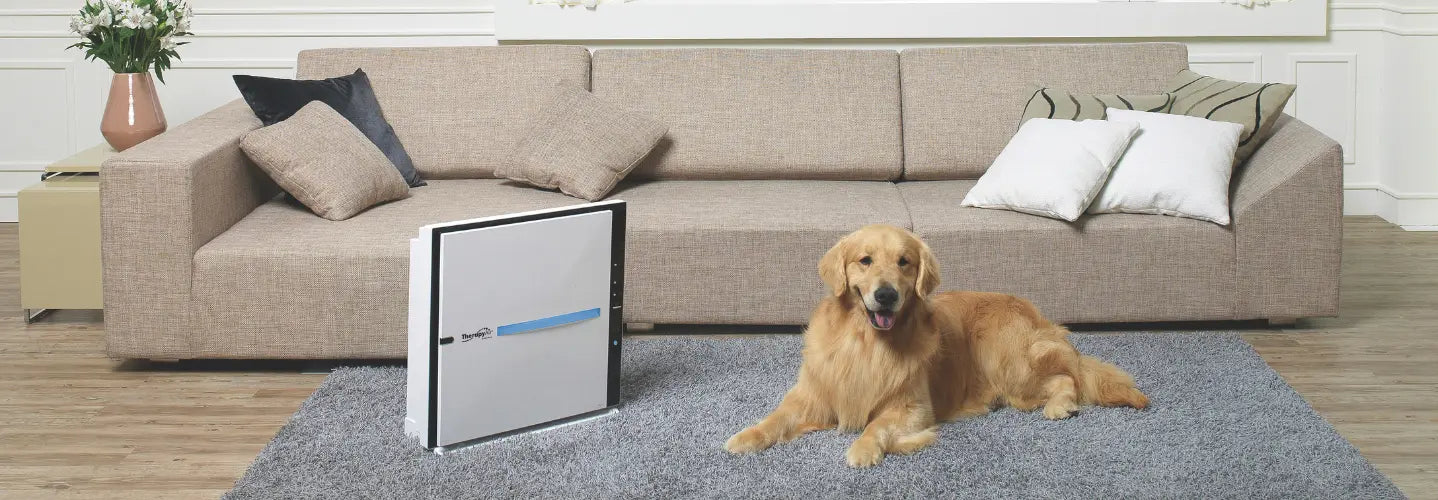
The TherapyAir iOn is not a tiny desk device, so it deserves a planned position. Its dimensions are 54.4 x 18.1 x 51 cm, which makes it slim enough for a wall-side placement, but large enough that it should not be squeezed behind furniture. It also offers a wall-mounted option, which can be useful when floor space, children, pets or cords are part of the setup decision.
How the specs affect placement
- Power: 47 W, so choose an accessible power point and avoid stretching the non-detachable cord across a walkway.
- Noise level: minimum 21 dB and maximum 46 dB. This supports bedroom or office use when a lower setting or bedtime mode is suitable for the room.
- Maximum purification capacity: 328 m3/h. This is a reminder to match the unit to the room rather than expecting one corner position to clean a whole house.
- Maximum airflow: 5.8 m3/min, so keep the intake and outlet open rather than blocked by curtains, cabinets or piles of washing.
- Purifying method: antistatic filter, antibacterial filter, HEPA filter, anti-allergenic filter and activated-carbon filter. Multi-stage filtration still needs clear airflow and regular filter care.
- Extra features: remote control, bedtime mode and child mode make placement easier when the best airflow spot is not right beside you.
Filter care is part of setup, not an afterthought. The product warranty notes require regular replacement with original filters, and the filter set guidance describes an annual filter package while noting that replacement frequency depends on the level of air pollution. For a practical maintenance routine, read how often to replace an air purifier filter.
Quick setup checklist before you press start
- Choose the room you want to clean first.
- Place the purifier where the intake and outlet are clear.
- Close the door if you are cleaning one room.
- Decide your window plan: ventilate first when outdoor air is suitable, then close the room while purifying.
- Avoid a direct face draft, especially beside the bed or desk.
- Choose a fan speed you can live with for the activity: sleep, work or family time.
- Set a filter reminder and check airflow regularly.
- Move the unit to the next room only when your routine changes.
When to choose a different air purifier setup
Change the setup if the room is too large, too open or too divided for the purifier to support well from one position. A large open-plan living area may need a higher-capacity unit, a more central placement or a routine where the purifier follows the room being used.
Multiple bedrooms usually need a room-by-room plan. Run the purifier in the child’s room before bedtime, move it to the main bedroom overnight, or use separate units if you need simultaneous support in more than one room.
Personal or wearable air ion options suit a different use case from a room purifier. They are not a replacement for a properly placed room unit, but they may suit people who want a portable personal option while moving between spaces.
If you are still deciding which air purifier setup fits your home, compare room size, filter type, noise level, maintenance and placement flexibility in our guide on how to choose an air purifier in NZ.
FAQs
Where should I put an air purifier in a bedroom?
Put it near the sleeping area, but not blowing directly at your face. Keep it clear of curtains, bedding and furniture, and mostly close the bedroom door overnight so it can clean that room more efficiently.
Should an air purifier be on the floor or raised up?
Follow the manufacturer’s guidance for your model. Many larger room purifiers are designed for stable floor placement, while some compact units can sit on a sturdy surface. In either case, keep the intake and outlet clear.
Should I close windows and doors when using an air purifier?
Yes, when you are actively purifying one room, close windows and mostly close doors so the unit can recirculate the same room air. Ventilate separately when outdoor air is suitable, then close the room while purifying.
Can one air purifier clean a whole NZ house?
Usually not. Most portable air purifiers work room by room. For a whole home, you may need a room-by-room routine, more than one unit, or a broader ventilation and moisture-control plan.
Where should an air purifier go in an open-plan lounge?
Place it near the main sitting zone with clear airflow, not hidden in a corner or entertainment cabinet. In very large open-plan spaces, move it closer to where people are sitting or consider whether the room needs a higher-capacity setup.
Where should I put an air purifier in a home office?
Place it near the desk area with clear airflow, but not under the desk and not blowing directly at your face. Keep cords away from chair wheels and choose a fan speed that is comfortable for calls and focus work.
Should an air purifier be near the bed, couch or desk?
Yes, near the main breathing zone is often useful, as long as the airflow is not uncomfortable and the unit is not blocked. Aim for nearby, clear and stable rather than hidden or directly aimed at your face.
What places should I avoid putting an air purifier?
Avoid placing it behind curtains, hard against walls, under furniture, beside open windows or doors, next to extractor fans, in damp bathrooms, directly by heat sources or where children or pets can knock it over.
Can an air purifier help with damp or mould?
An air purifier may help reduce some airborne particles in the room, but it does not fix dampness, remove moisture sources or solve mould growth. Use ventilation, heating, moisture control, cleaning, repairs and professional advice for serious or recurring mould.
How long should I run an air purifier each day?
Run it consistently in the room you are using, especially during sleep, work or evening family time. Use a higher speed when the room first needs clearing, then a quieter mode for steady daily use.
References
- US EPA: Guide to Air Cleaners in the Home
- Washington State Department of Health: Using a Portable Air Cleaner
- EECA: Reduce Dampness and Improve Airflow
- Building Performance NZ: Controlling Moisture and Damp
- World Health Organization: Indoor Air Quality Guidelines for Dampness and Mould
This guide is general indoor air guidance only. An air purifier can support cleaner indoor air as part of a practical home routine, but it does not replace ventilation, source control, moisture control or advice from a qualified health professional where personal health concerns are involved.