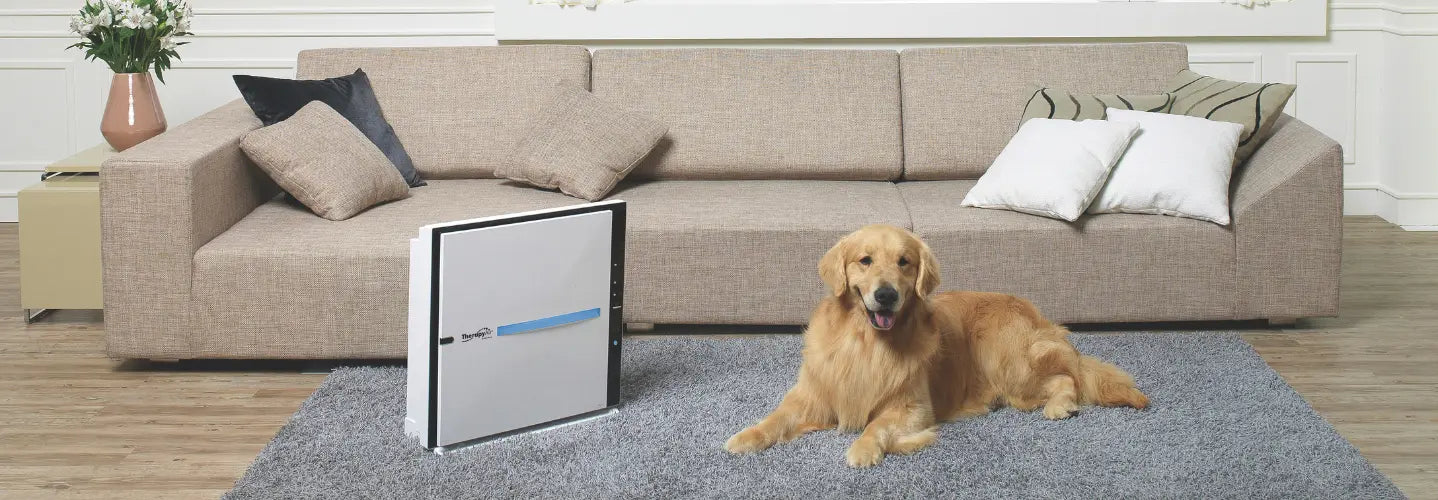
What Size Air Purifier Do I Need? NZ Room Size and Airflow Guide
What Size Air Purifier Do I Need? NZ Room Size and Airflow Guide
Two rooms can have the same floor area and still give an air purifier very different jobs. A 4 m by 4 m bedroom with a standard 2.4 m ceiling contains 38.4 m3 of air. Give the same 16 m2 floor area an average ceiling height of 3.2 m and the volume rises to 51.2 m3. That is one-third more air to move through the purifier.
This is the common sizing mistake: choosing from square metres alone while ignoring ceiling height, connected spaces and the speed you will actually use.
Direct answer: For an air purifier room size NZ calculation, measure length × width × average ceiling height to find room volume in cubic metres. Then compare that volume with verified manufacturer airflow, CADR or room-coverage information. Include any connected area where doors normally remain open.
Your 90-second room measurement
You need three measurements in metres. A laser measure is convenient, but a tape measure is enough.
Length in metres × width in metres × average ceiling height in metres = room volume in cubic metres
Example: 4 m × 3.5 m × 2.4 m = 33.6 m3
For a flat ceiling, use the measured height. For a simple sloping ceiling, measure the low side and the high side, add them together, then divide by two. Use that average height in the volume calculation. This is a practical estimate for early sizing, not an engineering airflow model.
If the lounge opens into a kitchen and the doorway normally stays open, measure both spaces and add their volumes. Do the same for an open hallway. Before comparing units, you can also review our air purifier collection to see which specifications are actually published for each model.
Read the specification label without mixing up the numbers
Air purifier listings can place several measurements side by side. They are related, but they do not mean the same thing.
| Term | What it tells you | What to check |
|---|---|---|
| Floor area in m2 | The footprint of the room | Useful only when ceiling assumptions are clear |
| Room volume in m3 | The amount of air in the room | Include average ceiling height and connected spaces |
| Airflow in m3/h | A volume of air moved per hour under stated conditions | Confirm the fan setting and test basis |
| CADR | A tested clean-air delivery measure that combines airflow and particle-removal performance | Check the test standard, pollutant type and units |
| Room-volume passes or ACH | A calculated number of room volumes per hour | Real results depend on mixing, leakage, layout and operating speed |
| Maximum capacity | The maker's stated upper operating figure | Do not assume it is CADR or normal-use output |
| Normal operating speed | The speed you can comfortably run for long periods | Noise and comfort may matter as much as maximum output |
The key rule is simple: airflow, maximum purification capacity and CADR are not automatically interchangeable. CADR is a tested measure of delivered clean air for specified particle categories. A manufacturer airflow or maximum-capacity number may be useful, but it should be described by its own label.
There is also no single room-pass target that suits every household purpose. A closed bedroom, a cooking area with continuing particle sources and a draughty open-plan room are different tasks. Use calculations to compare options, then confirm the operating conditions behind the numbers.
Therapy Air through four NZ room scenarios
The live Therapy Air Ion product page lists a maximum purification capacity of 328 m3/h. It does not separately publish an AHAM CADR or an official square-metre coverage rating. We can still use the listed maximum capacity for a transparent nominal calculation, provided we keep that limitation visible.
Nominal room-volume passes per hour = 328 ÷ room volume
| Room scenario | Room volume | Nominal maximum-capacity calculation |
|---|---|---|
| 3 m × 3 m × 2.4 m bedroom | 21.6 m3 | 328 ÷ 21.6 = approximately 15.2 room-volume passes per hour |
| 4 m × 4 m × 2.4 m bedroom or office | 38.4 m3 | 328 ÷ 38.4 = approximately 8.5 room-volume passes per hour |
| 5 m × 4 m × 2.4 m lounge | 48 m3 | 328 ÷ 48 = approximately 6.8 room-volume passes per hour |
| 8 m × 5 m × 2.4 m open-plan area | 96 m3 | 328 ÷ 96 = approximately 3.4 room-volume passes per hour |
Important limitation: These are mathematical examples based on the listed maximum purification capacity. They are not measured CADR results, official room ratings or guaranteed real-world ACH. Actual performance may be affected by fan setting, layout, open doors, placement, filter condition, incoming outdoor air and continuing particle sources.
The table is best used as a comparison tool. It shows why the same machine has a much lighter nominal task in a small closed bedroom than in a large connected living area. It does not prove how quickly a specific pollutant will be reduced in your home.
The open-plan penalty test
Open-plan spaces often look straightforward on a floor plan, but each connection increases the effective air-cleaning task. Before accepting a lounge-only calculation, ask:
- Is the kitchen connected?
- Are hallways normally open?
- Is the ceiling higher than 2.4 metres?
- Are exterior doors opened frequently?
Each yes adds either more air volume, more air movement or more continuing sources. Cooking, an open ranch slider and a stairwell can all make the real task larger than the lounge dimensions suggest.
One purifier may serve a genuinely open connected zone when the total volume and layout are suitable. It will not reliably clean several closed rooms through walls and shut doors. For practical setup details without repeating them here, see our NZ air purifier placement guide.
The Therapy Air Room-Fit Ledger: Capacity, Comfort and Upkeep
A sound buying decision needs more than one headline number. The Therapy Air Ion room-fit ledger below keeps capacity, day-to-day comfort, placement and upkeep in the same view.
| Ledger area | Published or practical detail | Room-fit question |
|---|---|---|
| Capacity | Maximum purification capacity listed as 328 m3/h. Use it only as a manufacturer-listed maximum-capacity figure, not as CADR or certified coverage. | What is the total room volume, including normally open connected spaces? |
| Comfort | Noise is listed from 21 to 46 dB. The speed you can comfortably run matters. Bedtime mode may suit overnight use, but lower-speed operation changes the effective cleaning rate. | Can you live, work or sleep with the speed needed for the room? |
| Placement | Dimensions are listed as 54.4 × 18.1 × 51 cm. The unit can be wall-mounted and includes remote control. It still needs a suitable power point and unobstructed airflow. | Is there a clear, powered position that suits the room and daily movement? |
| Upkeep | The five-stage system uses antistatic, antibacterial, HEPA, anti-allergenic and activated-carbon filters. The matching Therapy Air filter set is described as an annual package, while actual frequency may depend on pollution levels. The extended 10-year warranty has stated original-filter replacement, annual replacement and record-keeping conditions. See our filter replacement guide for the practical routine. | Are you prepared to budget for filters and keep replacement records? |
The best system is the one you will actually run and maintain. A strong maximum figure is less useful when the unit is always turned down, blocked by furniture or used with overdue filters.
Capacity is not the only fit
Before deciding, check the operating setup as carefully as the calculation:
- Noise: Is the likely fan speed acceptable during work, television or sleep?
- Clear placement: Can air enter and leave the unit without furniture or curtains blocking it?
- Wall-mount suitability: Would wall-mounting improve the layout, and is the wall position appropriate?
- Power access: Is there a suitable power point without creating a trip hazard?
- Modes: Are bedtime mode or child mode relevant to how the room is used?
- Filter commitment: Will you replace the specified filters and retain records where warranty conditions require them?
- Open doors: Does your volume calculation match how doors are normally used?
Your room-fit verdict
Clear fit
You have a closed room, a known volume and a practical position for the purifier. The published specification and your likely operating speed make sense together.
Needs confirmation
You have a high ceiling, open-plan layout, several connected spaces or an unusual continuing pollution load. Confirm the total volume and discuss the real operating conditions rather than relying on floor area alone.
Different plan needed
You expect one unit to clean several closed rooms, or to replace ventilation, moisture control, cleaning or source removal. A purifier is designed to filter air passing through the unit. It cannot remove every pollutant or solve building moisture and ventilation problems by itself.
FAQs
Should I size an air purifier by floor area or room volume?
Use room volume where possible because it includes ceiling height. Floor area can work only when the maker states the ceiling-height assumption behind its room rating.
How do I calculate room volume for an air purifier?
Multiply room length by width by average ceiling height, all in metres. Add the volumes of connected spaces when doors normally remain open.
Is m3/h the same as CADR?
No. m3/h is a flow unit, while CADR is a tested clean-air delivery measure that combines airflow with particle-removal performance under a stated method.
What does Therapy Air’s 328 m3/h maximum purification capacity mean?
It is the manufacturer's listed maximum purification capacity. It can support nominal room-volume calculations, but it is not presented as AHAM CADR, certified coverage or guaranteed real-world performance.
How does ceiling height affect air purifier size?
A higher ceiling increases room volume even when floor area stays the same. More air volume generally creates a larger air-cleaning task.
Can one air purifier cover an open-plan lounge and kitchen?
Possibly, when the full connected volume, layout, placement and operating speed are suitable. Include both areas in the calculation and allow for cooking and frequently opened doors.
Does lower fan speed change effective room coverage?
Yes. Lower speed usually moves less air, so the effective cleaning rate is lower than a calculation based on maximum capacity.
Next steps
Measure the length, width and average ceiling height of the room. Note every doorway that normally stays open, then record where the purifier could sit, the nearest power point and whether overnight noise matters. Those details give us a much better basis for a practical recommendation than floor area alone.
People with asthma, allergies or persistent respiratory symptoms should seek qualified health advice. An air purifier may support a cleaner indoor-air routine, but it is not medical treatment and does not replace ventilation, moisture control or source removal.