Beyond the Ion Buzz: Choosing an Ionic Air Purifier for NZ Homes
Beyond the Ion Buzz: Choosing an Ionic Air Purifier for NZ Homes
Quick answer: An ionic air purifier in NZ is best understood as an air cleaner that uses negative ions, often alongside filtration, to help reduce airborne particles. We recommend comparing the whole system: room size, filtration, maintenance, ozone safety and how you will use it. TherapyAir iOn is our room-focused option, while MyIon is our portable personal option. You can also browse our air purifier collection to compare options.
Why ionic air purifiers are getting attention in NZ
Many New Zealand homes deal with a mix of indoor air triggers: cooking odours, dust, pet dander, pollen, damp rooms, road pollution and closed-window winter living. An ionic air purifier appeals because it sounds simple: release negative ions, charge airborne particles and make them easier to remove from the breathing zone.
The important detail is that not every ionising product is built for the same job. Some are personal wearables. Some are room purifiers. Some use ionisation as the main feature, while others combine it with HEPA, carbon and other filter stages. That is why we recommend starting with the use case, not the buzzword.
For shoppers who want a broader foundation first, our air purifier NZ guide explains the core choices, while our negative ion air purifier NZ guide goes deeper into negative ion technology.
How an ionic air purifier works
An ionic air purifier releases charged particles, usually negative ions, into the air. These ions can attach to airborne particles such as dust, pollen or smoke particles. Once charged, those particles may clump together, become heavier or be easier for a filter to capture.
This is different from a filter-only purifier. A HEPA filter physically captures fine particles as air passes through the filter media. Activated carbon is used for odours and some gases. Ionisation is best viewed as a supporting technology unless the device has been designed specifically as a personal ioniser.
There is one practical point many buyers miss: if particles settle onto surfaces, cleaning still matters. An ioniser should be part of a clean air routine that can include ventilation, source control, vacuuming, dampness control and regular filter changes.
TherapyAir iOn: our room-focused ionic air purifier option
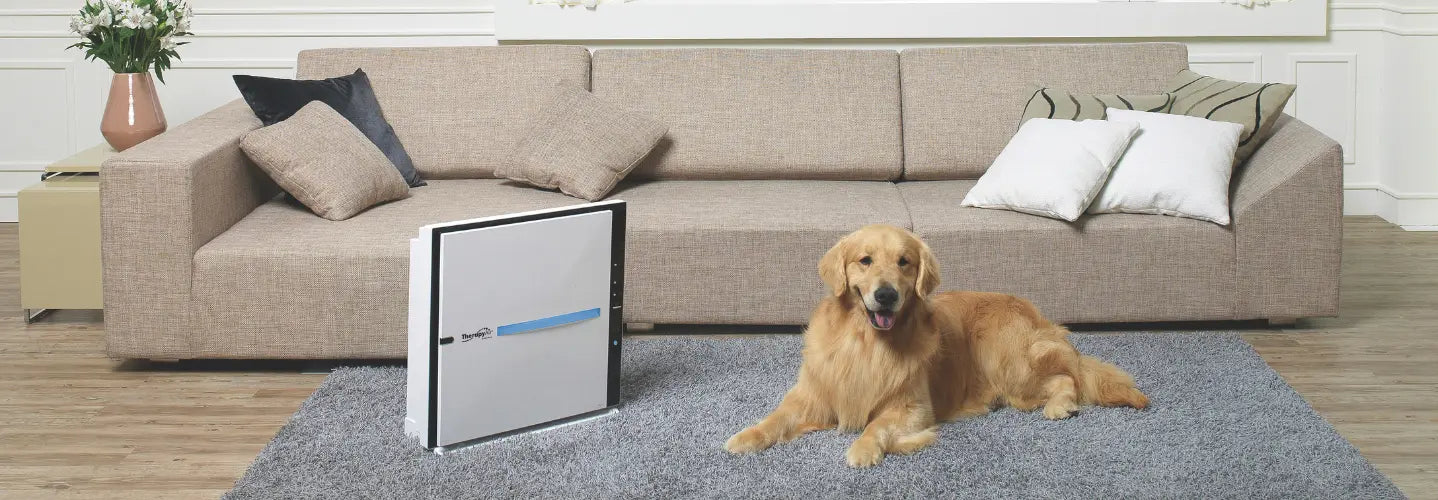
TherapyAir iOn is the option we showcase when a customer wants an ionic air purifier for a room rather than a wearable device. Its product information lists a five-stage purification approach: antistatic filtration, antibacterial filtration, HEPA filtration, anti-allergenic filtration and activated carbon filtration, plus negative ion generation.
That combination matters because a room purifier needs more than ion release. It needs airflow, filtration and a filter maintenance plan. TherapyAir iOn is listed with a maximum purification capacity of 328 m3/h, a noise range from 21 dB to 46 dB and a 10-year warranty when the stated warranty conditions are met.
For ongoing care, keep the matching replacement parts in mind. Relevant verified product pages include the HEPA filter for TherapyAir iOn, activated carbon filter for TherapyAir iOn, anti-allergenic filter for TherapyAir iOn, antistatic filter for TherapyAir iOn and TherapyAir iOn filter set.
You can also compare the standard model with TherapyAir iOn Black and learn more through our TherapyAir iOn feature guide.
MyIon: our portable personal ion support option
MyIon is designed for a different use case. It is a wearable ion device for people who want personal, portable ion support while commuting, travelling, working or moving between indoor spaces.
Its product information lists a compact design, USB-C charging, up to 10 hours of usage time, no replacement filter requirement and negative ion generation. That makes MyIon a simpler daily-carry option, but it should not be compared directly with a room purifier that moves air through multiple filters.
For shoppers comparing personal options, we also list MyIonz Pro and MyIonz Pro Beige. For a smaller room or desk-friendly purifier format, compare TherapyAir MiniSter.
We also recommend reading our MyIon air ioniser NZ guide and MyIon wearable ionic air purifier guide before choosing between personal and room use.
Ionic air purifier vs HEPA, carbon and ventilation
HEPA filtration
HEPA is usually the first filter type to check when your concern is fine particles such as dust, pollen, smoke particles or pet dander. It works only when air is pulled through the filter, so placement and run time matter.
Activated carbon
Activated carbon is useful when odours are part of the problem. It can support a fresher indoor environment, especially around cooking smells, some household odours and general stale-air concerns.
Ventilation and source control
No purifier should be used as an excuse to ignore the source of the problem. If a room is damp, tackle moisture. If there is mould, clean it safely and fix the moisture source. If outdoor air is good, ventilation can help. If outdoor smoke, pollen or traffic pollution is high, close windows and use filtration more strategically.
For this wider decision, compare our air purification NZ guide, indoor air pollution guide and air purifier filter guide.
How to choose an ionic air purifier in NZ
1. Define the job
Ask whether you need a room purifier, a personal wearable or both. For bedrooms, lounges and home offices, a room purifier such as TherapyAir iOn is the more logical comparison. For on-the-go personal use, MyIon is the better fit.
2. Match the purifier to the space
A purifier that is too small for the room will disappoint, even if the technology sounds impressive. Check airflow, room use, where the unit will sit and whether doors are open or closed.
3. Check filter availability
Filtered units need a maintenance plan. Before buying, check replacement filters, expected replacement timing and costs. Our air purifier filter replacement guide can help you plan ahead.
4. Consider running costs
The purchase price is only one part of the decision. Factor in filter replacement, power use and how often the unit will run. Our air purifier cost NZ guide gives a practical way to compare.
5. Avoid ozone-first products
We recommend avoiding products marketed mainly as ozone generators. If an ionising product has a sharp smell or causes irritation, stop using it, ventilate the space and check the product guidance.
6. Compare similar products fairly
Do not compare a wearable ion device with a multi-filter room purifier as if they do the same job. They sit in different parts of your clean air routine.
For a more complete buying checklist, use our how to choose an air purifier NZ guide and compare current options in our all products collection.
Where an ionic air purifier fits in common NZ situations
Apartment living
In apartments, you may have less control over outdoor traffic air, shared corridors or cooking odours. A room purifier with filtration can be useful in the room you use most, while a wearable can support personal use outside the home.
Bedrooms
For bedrooms, quiet operation and placement matter. Keep the purifier unobstructed, avoid tucking it behind curtains and consider running it before sleep. If dampness is part of the issue, compare our air purifier vs dehumidifier guide.
Pets and pollen
Air cleaning can help reduce airborne particles, but pet dander and pollen also settle on fabrics and surfaces. Keep up with vacuuming, washing bedding and cleaning soft furnishings.
Smoke and odours
Smoke particles and odours require the right mix of particle filtration and carbon filtration. A room purifier with HEPA and carbon stages is usually a better fit than an ion-only device.
Our practical recommendation
For most NZ homes, we would choose the main room solution first, then add portable support if your routine needs it. Start with TherapyAir iOn if you want a full room purifier with multiple filter stages and ion support. Choose MyIon if you want a wearable device for personal ion support on the move.
For product browsing, use the air purifier collection. For broader clean air guidance, start with our best air purifier NZ guide.
FAQs
Do ionic air purifiers really work?
Ionic air purifiers can help reduce some airborne particles by charging them, especially when ionisation works alongside physical filtration. We would not treat ionisation as a cure-all. For NZ homes, compare the whole system: filter type, room size, airflow, ozone safety, placement and maintenance.
Is it safe to be in a room with an ionizer?
It depends on the device and how it is used. We recommend choosing an ioniser designed for occupied spaces, avoiding ozone generators, following the manual and ventilating if you notice irritation or an ozone-like smell. People with asthma or respiratory concerns should seek professional advice.
Which is better HEPA or ionic air purifier?
For most homes, HEPA filtration is the more dependable starting point for fine particles, while ionisation can be a supporting feature. TherapyAir iOn combines multi-stage filtration with negative ion generation, so it is not a simple either-or choice.
What are the side effects of air purifier with ionizer?
Possible issues include irritation from ozone if the wrong type of unit is used, dust settling on surfaces and overconfidence that the unit replaces cleaning or ventilation. Choose a reputable device, keep it maintained and avoid any product marketed mainly as an ozone generator.
When is an ioniser appropriate versus ventilation and source control?
An ioniser can be useful as an added air-cleaning layer after you reduce sources of pollution, control dampness and ventilate when outdoor conditions are suitable. It should not replace fixing mould, smoke sources, excess moisture or poor maintenance.
Ionic air purifier in NZ: How do I compare options?
Start with the room or use case, then compare filter stages, airflow, replacement filter availability, noise, warranty, portability and safety information. For a room unit, compare TherapyAir iOn. For personal portable use, compare MyIon and MyIonz Pro.
Ionic air purifier in NZ: What maintenance is required?
Maintenance depends on the device. Filtered room units need regular filter checks and replacement. Wearable ion devices may need charging and exterior cleaning but may not use replacement filters. Always follow the product manual.
Ionic air purifier in NZ: What are common mistakes?
Common mistakes include buying only on price, choosing a unit too small for the space, ignoring filter costs, placing the purifier behind furniture, expecting it to remove moisture, and assuming all ionisers are the same.
Ionic air purifier in NZ: What should I look for?
Look for a clear use case, credible product information, suitable room coverage or portability, filtration where needed, available replacement parts, sensible noise levels, ozone safety information, local support and a warranty.
Next steps
- Compare the room-focused TherapyAir iOn.
- View the portable MyIon wearable ion device.
- Compare personal upgrade options such as MyIonz Pro.
- Shop the verified air purifier collection.
- Plan maintenance with the TherapyAir iOn filter set.
- Read the air purifier buying guide.
- Check the air purifier cost NZ guide.
- Contact us through the Purifiers contact page for help choosing.