How to Keep Pollen Out of the House in NZ: A Practical Plan for Hay Fever Season
How to Keep Pollen Out of the House in NZ: A Practical Plan for Hay Fever Season
Closing the windows is the obvious move when pollen season arrives, but it is not the whole answer. A home can be shut against the breeze and still collect pollen on jackets, hair, shoes, school bags, pets and washing brought in from outside.
To keep pollen out of the house, tackle both ways it gets indoors: reduce windblown pollen when outdoor levels are high, and reduce the pollen carried in on people, animals and fabrics. Once pollen is inside, clean settled particles from surfaces and use room-air filtration for pollen that is still airborne.
Closing the windows helps, but it is not the whole job
Pollen reaches an NZ home in two broad ways. Some blows in through open windows and doors. Some arrives with you. That second route is easy to miss because you do not need to see yellow dust for pollen to be present.
During pollen season in NZ, closing windows when local pollen levels are high can reduce one source of entry. It is especially sensible on dry, windy days and during other high-pollen periods. But keeping a house closed all day is not the goal. New Zealand homes still need sensible ventilation, so the better approach is to choose when you open up rather than treating every window as permanently off limits.
If pollen is already floating around inside, a room purifier can become useful alongside those practical steps. You can browse our air purifiers for indoor particle filtration without expecting the purifier to do the jobs that belong to the front door, washing machine or vacuum.
What comes through the door with you
Think about what has been outside before it comes into the lounge or bedroom. A jacket brushed against grass, hair exposed on a windy walk, shoes worn through a park, a backpack left on the sideline and children's sports gear can all carry outdoor material back inside.
The simplest change is to stop that transfer close to the entrance. Shoes can stay near the door rather than travelling through bedrooms. Coats, hats and bags that have spent time outdoors can be kept away from beds and soft furniture. After a high-pollen outing, changing clothes and showering can also reduce what gets carried further through the house.
Hair deserves extra attention before bed. Health NZ advises washing hair before bed after pollen exposure so pollen does not transfer to the pillow. That is a small step, but it matters because a pillow puts whatever is on its surface close to your face for hours.
Why washing and bedding can bring pollen back inside
Freshly line-dried sheets smell great, but during a high-pollen spell the washing line can work against you. Pollen can settle on clothes, towels and bedding outdoors, then come inside on the fabric.
On higher-pollen days, drying washing indoors or using a dryer can reduce that transfer. If you dry laundry indoors, make sure you still manage moisture properly with ventilation or dehumidification where needed. The aim is not to trade pollen for a damp room.
For the bedroom, keep outdoor clothes off the bed and wash bedding regularly. If you have been outside during a heavy pollen period, showering and changing before bed also helps keep pollen from moving from your skin, hair and clothes onto sheets and pillows.
Pets can carry the outdoors indoors
A dog that has rolled on the lawn or a cat that has been through long grass can carry pollen on its coat and paws. During pollen season, wiping a pet down with a damp microfibre cloth after outdoor time can reduce some of what comes inside. Keeping pets out of the bedroom can also help protect the space where you sleep.
Pet dander is a different indoor allergen from pollen, so we will not turn this into a second pet-allergy guide. If both are part of the problem at your place, our air purifier for allergies NZ guide covers pollen, dust and pet dander together.
Fresh air is useful, so choose the timing
There is no single safe hour when every NZ home should open its windows. Pollen varies by plant, region, season, wind and weather. Allergy New Zealand notes that the season also moves through the country, with pollination generally starting earlier in the north and later further south.
Morning can be a higher-pollen period for some common plants, and Health NZ recommends extra care when counts are high, including mornings, windy days and after thunderstorms. But a fixed rule such as always open at a certain hour is too blunt. Check current local pollen information and look at the conditions outside your own home.
When outdoor levels are lower, use that opportunity to air the house. When pollen is high, keep windows more closed for a period, especially in the room you want to keep cleaner. If you are running an air purifier, closing that room while it works gives the unit a better chance to recirculate and filter the same indoor air instead of constantly dealing with new outdoor pollen.
Once pollen settles, cleaning takes over
An air purifier works on particles that reach the unit while they are airborne. Pollen that has already landed on the floor, sofa, curtains, bedding or other textiles needs direct cleaning.
This is where damp dusting, vacuuming with suitable filtration, mopping hard floors and laundering bedding matter. A damp cloth is useful because it collects settled material instead of simply flicking it back into the air. Pay extra attention to the entry area, bedroom and the soft surfaces where outdoor clothes, bags or pets tend to land.
If your aim is to reduce pollen indoors, think of cleaning and filtration as two different jobs. Cleaning removes what has settled. Filtration works on airborne particles moving through the room.
When the pollen is already airborne: where Therapy Air fits
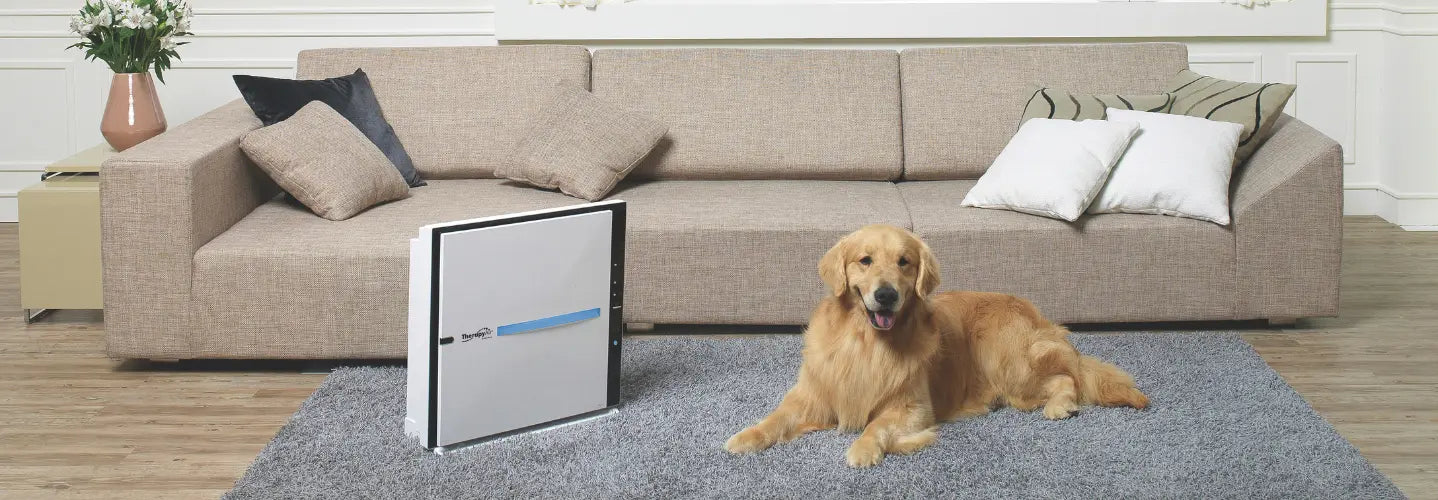
We see purification as the room-air step after practical source control and surface cleaning. Once pollen is airborne, Therapy Air® Ion is relevant because its filtration system is designed to work on particles moving through the unit.
Therapy Air uses antistatic, antibacterial, HEPA, anti-allergenic and activated-carbon filters. Pollen is specifically listed under the antibacterial filter stage. Maximum purification capacity is listed as 328 m³/h, and operating noise is listed from 21 to 46 dB.
What we like about that setup is that it gives you a dedicated room-air tool for the part of the pollen problem you cannot wipe off a surface. Correctly used, a purifier can help reduce airborne pollen that reaches and passes through the unit. It does not stop pollen arriving at the door, and it does not lift settled pollen out of carpet or bedding, which is why the earlier steps still matter.
For a bedroom or living room, room fit and clear airflow matter just as much as the filter list. We have separate guides on where to put an air purifier in an NZ home and choosing an air purifier for room size, so you can get those details without turning pollen season into a maths exercise.
The goal is a lower-pollen home, not a sealed house
You do not need to live with every window permanently shut. A more realistic plan is to reduce pollen at each point where you can: choose your ventilation times, leave outdoor carriers near the door, keep pollen off bedding, clean settled particles and use filtration for the pollen that remains airborne.
That combination is what helps create a lower-pollen home. It also makes it easier to focus your effort where it matters most, especially the bedroom. If you want help matching a purifier to a particular room, talk to our Clean Air Water team and tell us the room size and how you use the space.
If hay fever symptoms are persistent, severe or linked with asthma, keep following your treatment or asthma plan and speak with your GP or pharmacist if you need more support. An air purifier is a home air-quality tool, not a replacement for medical care.
Common questions about pollen in the home
How does pollen get inside a house?
Pollen can blow in through open windows and doors, and it can also be carried inside on clothing, hair, shoes, bags, pets and washing. Reducing both routes is more effective than relying on closed windows alone.
Should I keep windows closed during pollen season in NZ?
Keep windows more closed when local pollen levels are high, especially during dry, windy conditions or other high-pollen periods. Do not keep the home sealed all the time. Ventilate when outdoor conditions are better, then close the room again if you are using filtration.
What time of day is pollen usually higher in NZ?
Morning is often a higher-pollen period for some plants, but there is no one safe NZ-wide time for every region and pollen type. Plant species, location, wind, rain and other weather conditions all matter, so use current local pollen information rather than a fixed hour.
Can pollen stick to clothes, hair, pets and washing?
Yes. Pollen can collect on clothing, hair, pet coats and washing dried outdoors. Changing after high exposure, washing hair before bed, wiping pets after outdoor time and bringing washing in only when conditions are suitable can reduce what gets carried through the home.
How do I reduce pollen in a bedroom?
Keep outdoor clothes and pets off the bed, wash bedding regularly, wash pollen from your hair before sleep after high exposure, and keep the bedroom window more closed when pollen is high. Clean settled pollen from surfaces and use suitable room-air filtration for airborne particles.
Can an air purifier reduce airborne pollen?
A correctly used air purifier with suitable particle filtration can help reduce airborne pollen that reaches and passes through the unit. It will not stop pollen entering the home or remove pollen that has already settled on floors, bedding or furniture.
Should I run an air purifier with the windows closed during pollen season?
Usually, yes, while you are actively filtering a room during a high-pollen period. Closing the windows helps the purifier recirculate the same room air instead of constantly receiving new outdoor pollen. Ventilate separately when outdoor conditions are more suitable.
Is an air purifier enough for hay fever?
No. An air purifier is best used alongside reducing pollen entry, changing or washing after high exposure, cleaning settled pollen and following any hay fever treatment advice that applies to you. If symptoms are persistent, severe or related to asthma, speak with your GP or pharmacist.